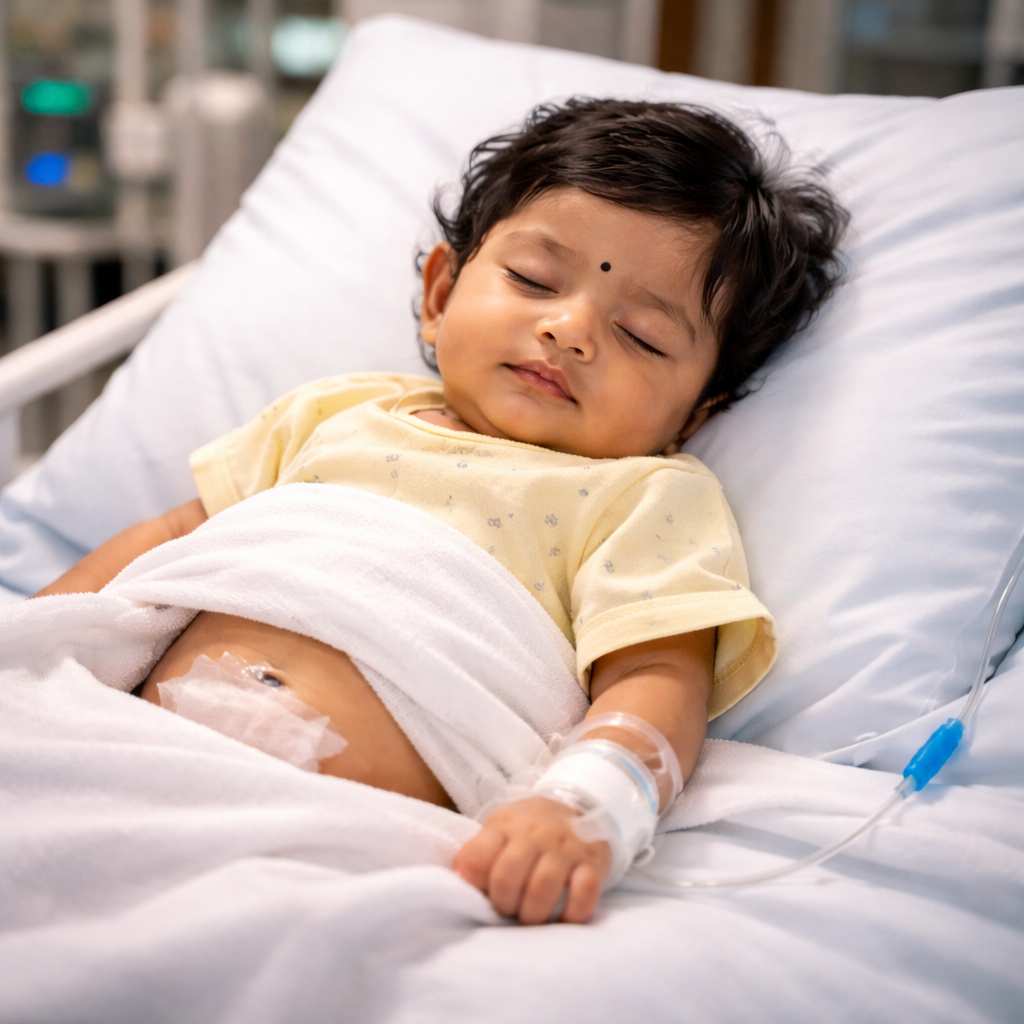
Neonatal surgery is a specialised branch of pediatric care. It is focused on performing surgical procedures on newborn babies. This usually happens within the first 28 days of life. These surgeries are often critical and time sensitive. That’s because of congenital abnormalities or life-threatening conditions present at birth.
The idea of neonatal surgery in Kollam on a newborn can feel overwhelming for parents. But advances in medical technology and neonatal care have significantly improved outcomes and survival rates. Read on to learn more about it, and if you’re looking for neonatal surgery in Kollam, contact us at the earliest.
What is Neonatal Surgery?
Neonatal surgery involves diagnosing and treating structural or functional issues in newborns. These procedures are carried out by highly trained pediatric surgeons. Neonatal surgeries in Kollam are often done in collaboration with neonatologists, anesthesiologists, and specialised nursing staff. The goal is to correct abnormalities early. This helps the baby to grow and develop as normally as possible.
Newborns are uniquely delicate patients, requiring specialised equipment and expertise. Their organs are still developing, and even minor imbalances can have significant effects. This makes neonatal surgery one of the most complex and sensitive areas in modern medicine.
Who Needs Neonatal Surgery?
Not all newborns require surgery. Those who do, often have conditions identified either during pregnancy (via prenatal scans) or shortly after birth. Babies who may need neonatal surgery include:
- Infants born with congenital problems
- Premature babies with complications
- Newborns having difficulty breathing, feeding, or passing stool
- Babies with visible abnormalities, such as swelling, masses, or deformities
Early diagnosis plays a crucial role. In many cases, healthcare providers can plan neonatal surgery in Kollam immediately after birth, ensuring timely treatment and reducing risks.
Common Conditions Requiring Neonatal Surgery
Several conditions may require neonatal surgery in Kollam. Some of the most common conditions include:
Congenital diaphragmatic hernia (CDH): A condition where a hole in the diaphragm allows abdominal organs to move into the chest cavity, affecting lung development.
Esophageal atresia: The esophagus does not connect properly to the stomach, making feeding impossible without intervention.
Intestinal obstruction: Blockages in the intestines that prevent normal digestion.
Gastroschisis and omphalocele: Conditions where the baby is born with organs outside the body due to an opening in the abdominal wall.
Hirschsprung’s disease: A condition affecting the large intestine, causing severe constipation or intestinal blockage.
Pyloric stenosis: Thickening of the stomach outlet, leading to forceful vomiting in newborns.
Each of these conditions requires careful evaluation and timely neonatal surgery in Kollam to prevent complications.
Common Treatments and Surgical Approaches
The type of neonatal surgery in Kollam depends on the condition being treated. Surgical approaches may include:
Open surgery: A traditional method involving a larger incision to access the affected area.
Minimally invasive surgery (laparoscopy): Involves smaller incisions and the use of specialised instruments. It leads to quicker recovery and less pain and scarring.
Emergency surgery: Performed immediately after birth in critical cases.
Staged procedures: Some conditions require multiple surgeries over time for complete correction.
In addition to surgery, newborns often require supportive care such as ventilators, IV nutrition, and medications to stabilise their condition before and after the neonatal surgery in Kollam.
Recovery and Post-Surgical Care
Recovery after neonatal surgery in Kollam varies depending on the complexity of the condition and the baby’s overall health. Most newborns are cared for in a Neonatal Intensive Care Unit (NICU), where they are closely monitored.
Typical recovery aspects include:
Hospital stay: Ranges from a few days to several weeks
Feeding support: Some babies may need tube feeding until they can feed normally
Wound care: Proper care of surgical sites to prevent infection
Follow-up visits: Regular check-ups to monitor growth and development
Parents play an essential role in recovery. Healthcare teams usually guide them on feeding, hygiene, and recognising warning signs after discharge.
Long-Term Outlook
The long-term outlook for babies undergoing neonatal surgery in Kollam has improved significantly. Many children go on to live healthy, normal lives, especially when conditions are treated early. However, some may require ongoing medical care or additional procedures as they grow. Early intervention, skilled surgical care, and strong parental support are key factors in ensuring the best outcomes.
Neonatal surgery in Kollam is a vital field that offers life-saving solutions for newborns with serious medical conditions. While it can be a challenging experience for families, understanding the process, conditions, and recovery can provide reassurance. With advancements in medical science and specialised care, the future for babies requiring neonatal surgery in Kollam is more hopeful than ever.